

Lead generation is the top marketing obstacle for small businesses. In 2025, 30% of small business owners said it was their primary challenge, ahead of budget constraints, according to the 2025 In-House vs Outsourcing report. That changes how you should think about growth. The issue usually isn't a lack of effort. It's a weak system.
Most owners I speak with aren't short on ideas. They're short on a repeatable process that turns attention into booked calls, qualified opportunities, and revenue. They post, boost, email, ask for referrals, maybe run a webinar, then wonder why results feel random.
Profitable lead generation for small business starts when you stop asking, "How do I get more leads?" and start asking, "Which leads can I afford to acquire, and how quickly do they pay back?" That question leads to better choices from day one.
Why Most Lead Generation Efforts Fail
A lot of small businesses lose money before they ever have a traffic problem. They target too broadly, send people to generic contact pages, delay follow-up, and judge campaigns by activity instead of profit.
That pattern explains why lead gen feels frustrating even when the business is busy.
Activity isn't the same as a lead system
Small teams often do the visible work first. They buy ads, post on social platforms, ask friends to share a promotion, or sponsor a local event. Those actions can create awareness, but they don't automatically create qualified pipeline.
Breaks usually happen in four places:
- Targeting is vague: The business markets to "anyone who might need us" instead of a narrow buyer type with a clear problem.
- Capture is weak: Visitors see a generic "Contact Us" form instead of a specific reason to respond.
- Qualification is inconsistent: One owner treats every inquiry as urgent while another ignores leads that don't "feel serious."
- Follow-up is slow: Prospects cool off while the team is still deciding who should call first.
Practical rule: If you can't explain why a lead is a fit, how it entered your pipeline, and what happens in the next 48 hours, your campaign isn't a system yet.
Small budgets make bad decisions more expensive
When you're working with limited cash, every channel decision matters more. A large company can survive a few sloppy campaigns. A small business usually can't. That's why lead generation for small business has to be built around measurement from the first form submission, not added later after money is already gone.
Crowded markets make this worse. Buyers compare more options, take longer to decide, and expect relevance fast. If your message is generic, your offer is weak, or your response is delayed, another business gets the call.
The fix isn't doing more. It's building a smaller, tighter engine that can prove what works.
Laying Your Foundation for Quality Leads
Good campaigns start before the first ad, article, or webinar invite. The foundation is knowing exactly who you're trying to attract and what a worthwhile lead looks like.

Define your ideal customer profile
Start with one buyer group, not five. If you're a local physical therapy clinic, "adults in town" is too broad. "Post-operative knee replacement patients who need guided recovery and prefer a clinic within a short drive" is useful.
That level of detail changes everything. It affects your website copy, referral partners, keywords, lead magnet, and even the questions on your intake form.
Use a simple ICP worksheet with these fields:
| Field | Example for a physical therapy clinic |
|---|---|
| Who they are | Adults recovering from surgery |
| Primary problem | Pain, stiffness, fear of re-injury |
| What they want | Safe recovery and return to normal movement |
| Decision triggers | Discharge from surgeon, poor home exercise adherence |
| Where they look | Google search, surgeon referrals, local Facebook groups |
| What blocks action | Insurance confusion, travel concerns, trust |
A lot of wasted ad spend comes from skipping this step. If you don't know the trigger that makes someone look for help, you can't write an offer they'll respond to.
Turn goals into operating rules
SMART goals sound basic, but they force discipline. For a small business, that matters because one unclear campaign can waste a month.
Set goals that answer these questions:
- What result counts as success
- Which channel you're testing
- How leads will be qualified
- What follow-up happens
- How you'll judge profitability
A weak goal is "get more leads from the website." A stronger one is "generate qualified consultation requests for post-op recovery services from local search traffic using a recovery checklist landing page, then track whether those inquiries progress to booked evaluations."
The best early campaign goals are narrow enough to manage and specific enough to measure.
Build compliance and trust in from the start
If you work in healthcare, legal, finance, education, or any service where people share sensitive information, security isn't a nice extra. It's part of the value proposition. Clients notice when your intake flow looks sloppy, your forms send data to disconnected tools, or your meetings happen on consumer-grade setups with unclear protections.
At a minimum, your stack should support:
- Secure data handling: Form submissions should go directly into your CRM or intake system.
- Access control: Staff shouldn't be forwarding lead details through personal inboxes or chat threads.
- Encrypted communication: Meetings and follow-up tools should protect client information in transit.
- Industry compliance: Healthcare providers especially need HIPAA-appropriate workflows.
Owners sometimes think encryption is only a technical feature. It isn't. In practice, it helps close business because it reduces hesitation. For a clinic, tutor, consultant, or counselor, trust often starts before the first conversation.
Choosing Your High-Impact Low-Cost Channels
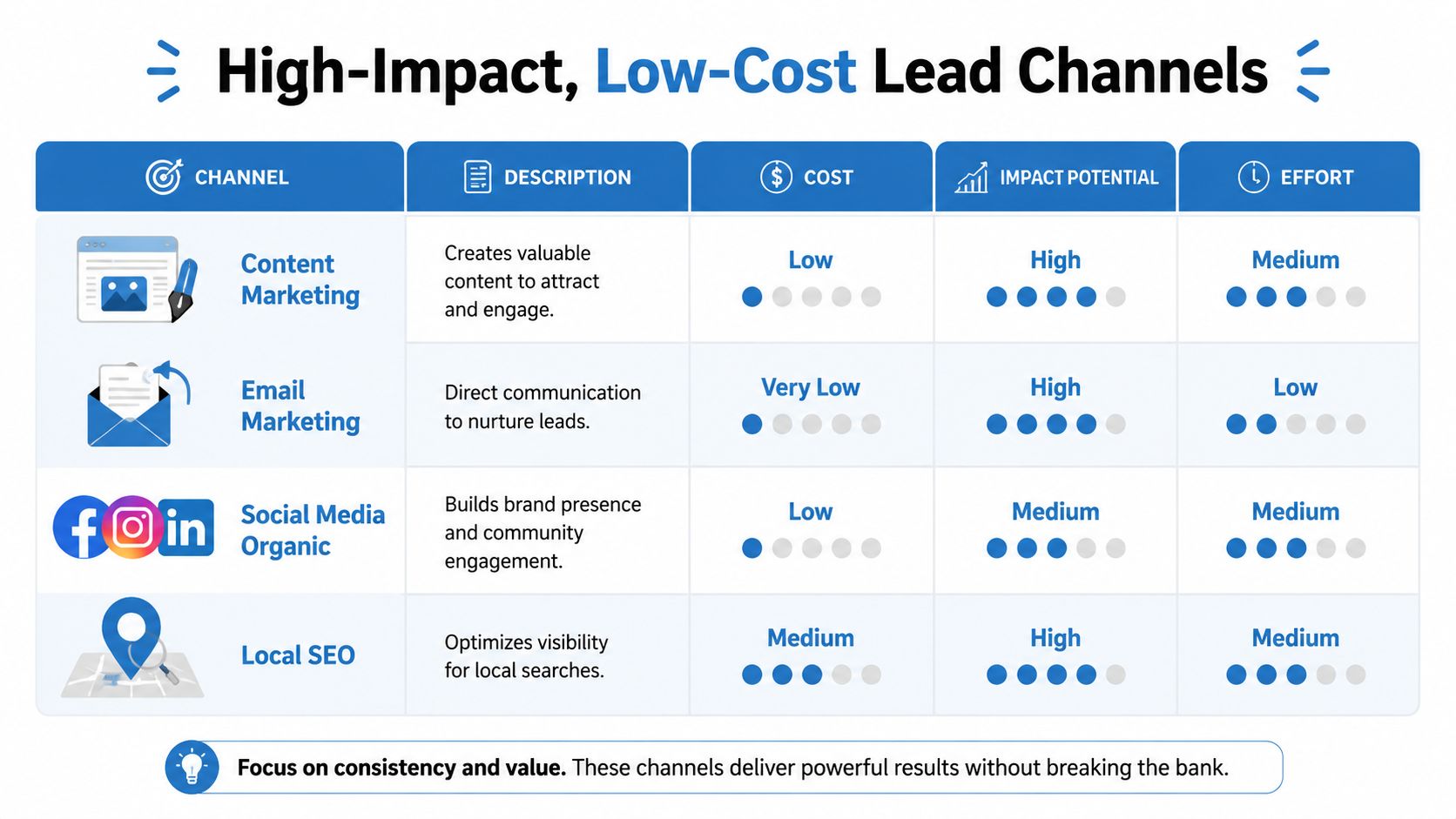
If your budget is tight, don't spread yourself across every channel. Pick one demand-capture channel and one nurture channel. That's enough to start learning what converts.
Content and search usually earn the first test
The economics are hard to ignore. Content marketing costs 62% less than traditional marketing while generating three times as many leads, according to HubSpot marketing statistics. The same source notes that businesses with 401 to 1000 website pages generate approximately 600% more leads than those with only 51 to 100 pages.
That doesn't mean a small business should rush out and publish hundreds of pages. It means useful content compounds. One well-built page answering a high-intent question can keep producing leads long after the ad budget is gone.
For local operators, I usually compare channels like this:
| Channel | Good fit | Main cost | Main risk |
|---|---|---|---|
| Content marketing | Service businesses with expertise | Time, writing, basic design | Slow payoff if topics are vague |
| Local SEO | Clinics, trades, agencies, local providers | Setup work, page optimization, reviews | Weak results if location pages are thin |
| Targeted social ads | Offers with a strong hook | Ongoing ad spend, creative testing | Fast waste if targeting is broad |
| Referrals | Relationship-driven services | Staff time, partner outreach | Inconsistent if unmanaged |
| Email nurture | Any business with a list | Low software cost, copy time | Underused if follow-up is irregular |
If you're operating in a local market, a practical resource on search visibility is SEO for small business Australia. It helps frame the difference between generic SEO advice and location-specific execution.
What channels usually work first
I prefer channels that show intent early.
Local SEO works when someone is already looking. They have a problem, a location, and often urgency. That's very different from interrupting them in a feed.
Content marketing works when you can answer narrow buying questions. Not "tips for back pain." Better: "What to ask before choosing a post-surgery physiotherapy clinic."
Referrals work when you formalize them. A referral source needs a reason to remember you, language they can repeat, and a clean handoff process.
Social ads can work fast, but only if the offer is specific. "Book a free consultation" is usually too weak. "Download the home care checklist to prepare for your first week after surgery" gives people a reason to act.
Cheap traffic isn't cheap if sales can't use it.
Webinars deserve a bigger role in small-budget lead generation
Webinars sit in a useful middle ground. They're more engaging than a blog post and often easier to launch than a full workshop series. They also let you teach, qualify, answer objections, and collect intent signals in one session.
For small teams, the trade-off is software cost. Standalone webinar tools can push monthly costs past what a new campaign can justify, especially if you're still validating an offer. That's where bundled platforms matter. For example, webinar software for small business can be more practical when webinar hosting is included rather than added as a separate subscription. AONMeetings also starts at ₹179 per user per month, includes webinars on all plans, and includes bank-level encryption, which matters when you're hosting sessions that involve client questions or regulated topics.
That pricing comparison matters in practice. If you're choosing between a lower-cost all-in-one setup and a webinar stack that starts around $100+ per month, your campaign math changes quickly. On a small budget, lower fixed software costs give you more room for creative, landing page work, and follow-up.
A simple channel choice for a first campaign
If I were advising a small clinic, consultant, or training business from scratch, I'd start like this:
- Pick search or referrals for intent
- Use content or a webinar for education
- Use email for follow-up
- Skip broad awareness campaigns until tracking is clean
That combination isn't flashy, but it gives you a better shot at profitable lead generation for small business than chasing every new tactic at once.
Building Your First Lead Generation Campaign
The fastest way to improve lead generation is to replace a generic contact form with a specific offer and a clear follow-up path. That's the difference between passive interest and captured intent.
Start with a lead magnet that solves one immediate problem
Independent guidance from Salesforce's small business lead generation guide emphasizes using a specific lead magnet, such as a calculator, diagnostic quiz, or industry checklist, and wiring every form field directly into the CRM so follow-up is immediate.
That advice lines up with what works in practice. Generic "contact us for more information" pages attract mixed intent. Specific offers filter for relevance.
Here are practical examples:
- Clinic: "Post-surgery recovery checklist for your first two weeks at home"
- Bookkeeper: "Quarter-end close checklist for service businesses"
- Tutor: "Exam readiness diagnostic quiz for parents"
- Doula or birth professional: A planning guide, prep checklist, or educational workshop signup. If you're in that niche, Bornbir's doula marketing strategies is a useful example of how specialized positioning changes outreach.
What doesn't work as well:
- A blank contact form with no reason to fill it out
- A home page CTA that asks for a call too early
- A landing page that sends visitors in three directions
Build a landing page that does one job
Your first landing page doesn't need to be clever. It needs to be clear.
Use this structure:
- Headline with the problem
- Short subheading with the value
- One visual or trust element
- Brief bullet list of what they'll get
- Simple form
- Immediate next step after submission
For a webinar or consultation-based business, trust matters a lot here. If people are booking a meeting, attending a session, or sharing details, secure delivery becomes part of conversion.
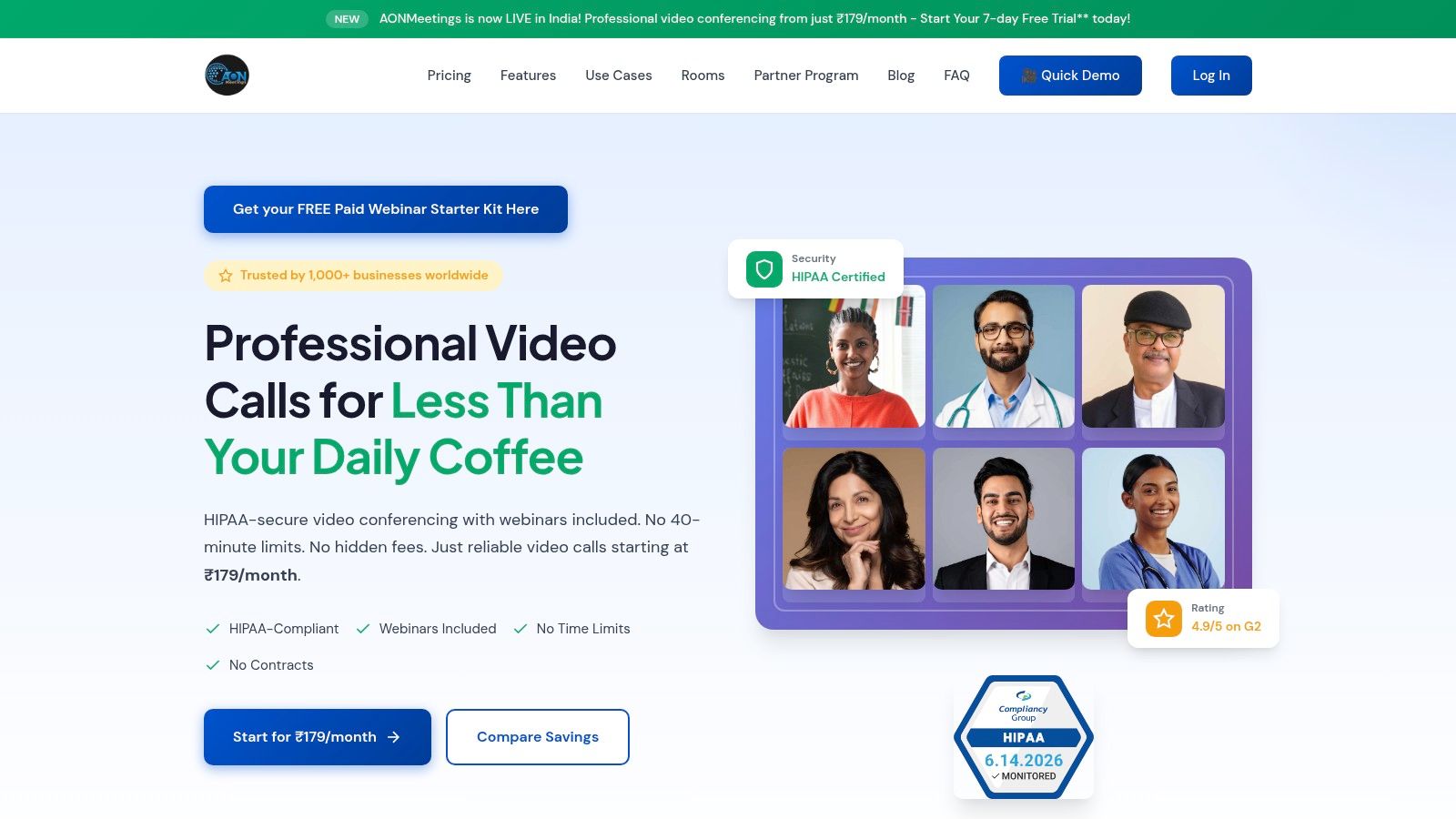
A good webinar or consult stack should support encrypted sessions, controlled access, and easy attendance. If you want more people to show up, ways to increase webinar attendance are worth reviewing before launch. Attendance is never just a promotion problem. It's also a reminder, friction, and trust problem.
If the offer is specific but the path after signup is messy, conversion still drops.
Use a real nurture cadence, not guesswork
One of the few lead gen practices that consistently separates disciplined teams from chaotic ones is follow-up. A widely used cadence is 6 to 8 touchpoints across email, phone, and social over 2 to 3 weeks, according to monday.com's sales lead generation process guide. The same guidance warns against relying on gut feel instead of consistent qualification rules.
That means every lead should enter a simple path, such as:
| Day | Touchpoint | Purpose |
|---|---|---|
| Day 0 | Confirmation email | Deliver the checklist, webinar link, or next step |
| Day 1 | Personal follow-up email | Ask one qualifying question |
| Day 3 | Call or voicemail | Check intent |
| Day 5 | Helpful email | Share a relevant tip or answer a common objection |
| Day 8 | Social touch | Connect or send a light reminder if appropriate |
| Day 12 | Invitation | Offer a consult, demo, or webinar replay |
| Day 16 | Final active follow-up | Ask if timing is wrong or if they want to revisit later |
You don't need all of this automated on day one. You do need consistency.
Qualify before sales spends time
A basic rule for lead generation for small business is this: marketing captures interest, but qualification protects margin. Sales time is expensive, even when the owner is doing the selling.
Add one or two fields that help sort leads early:
- Best fit question: "What problem are you trying to solve right now?"
- Timing question: "Are you looking for help now or researching options?"
- Service match: "Which service are you most interested in?"
That small bit of structure helps you separate a curious browser from someone worth pursuing.
Measuring What Matters for Profitability
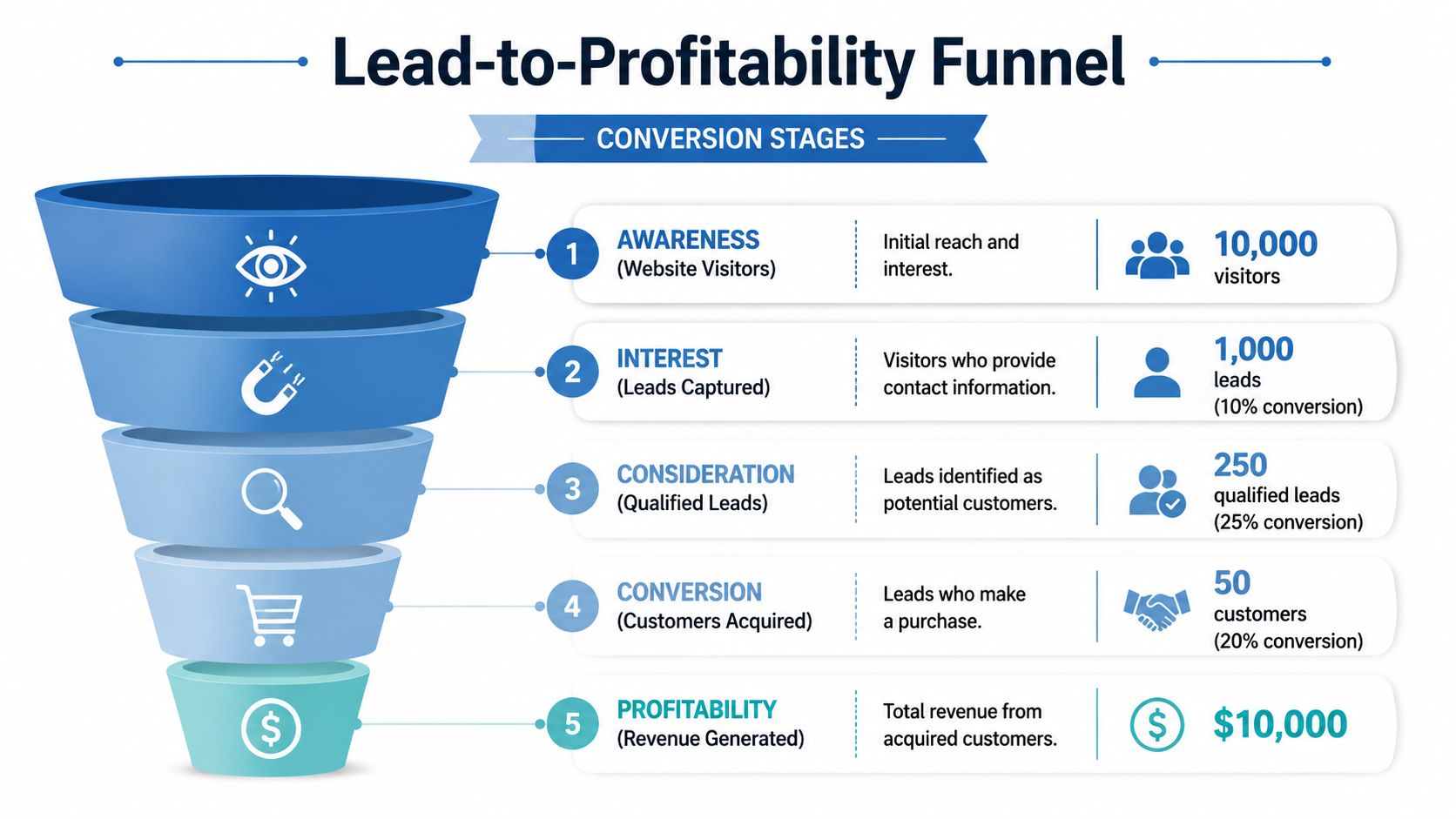
Most small-business campaigns fail in reporting, not execution. Owners can tell you how many people liked a post or opened an email, but they can't tell you which channel produced customers at a sustainable cost.
That's the gap that matters most. Keap's lead generation guidance points out that the major unanswered question for small businesses is how to measure profitability and compare CAC across channels, not just collect a list of tactics.
Ignore vanity metrics first
If a channel generates attention but not qualified opportunities, it may still have branding value. But a small business can't afford to confuse attention with profitable acquisition.
Track these instead:
- Cost per lead: What you spent to generate each inquiry
- Lead-to-qualified rate: How many leads are worth follow-up
- Customer acquisition cost: Total spend required to win a customer
- Lead-to-customer conversion rate: Which channels close
- Payback period: How long it takes to recover acquisition cost
You don't need expensive software to do this. A spreadsheet is enough if it's updated every week.
A practical tracking sheet
Use one row per campaign or channel test. Keep it simple.
| Channel | Spend | Leads | Qualified leads | Customers | Notes |
|---|---|---|---|---|---|
| Local SEO page | Enter cost | Enter lead count | Enter qualified count | Enter customers | Track service type |
| Referral outreach | Enter cost | Enter lead count | Enter qualified count | Enter customers | Track partner source |
| Webinar campaign | Enter cost | Enter lead count | Enter qualified count | Enter customers | Track attendance and topic |
| Social ad test | Enter cost | Enter lead count | Enter qualified count | Enter customers | Track audience and offer |
From there, ask three hard questions every month:
- Which channel brings the best-fit leads
- Which channel closes fastest
- Which channel would still make sense if budget got tighter
A campaign isn't profitable because leads are cheap. It's profitable because customers from that channel justify the cost and time required to win them.
Compare channels like an owner, not a marketer
Many teams get stuck on this point. A low-cost channel can still be expensive if it sends unqualified leads. A more expensive channel can still be efficient if those leads close quickly and stay longer.
That is why lead generation for small business should always be reviewed at the channel level. Don't lump referrals, organic search, webinars, and paid campaigns into one bucket. They behave differently and deserve separate decisions.
If one channel consistently brings high-fit leads, protect it. If another creates noise, cut it fast or redesign the offer.
Your Optimization Checklist for Sustainable Growth
Lead generation isn't something you set up once. It improves through small fixes made consistently.
Weekly checks
- Review lead quality: Look at every new lead and ask whether it matches your ICP.
- Check speed to follow-up: Make sure form fills, webinar registrations, and booked inquiries get a response quickly.
- Watch broken paths: Test forms, landing pages, and calendar links yourself.
- Clean source tracking: Every lead should have a clear source recorded.
Monthly improvements
- Refresh headlines: Test a new landing page headline or offer angle.
- Tighten forms: Keep only fields that help qualification or routing.
- Review your lead magnet: Salesforce guidance stresses using a specific lead magnet and sending every form field directly into the CRM for immediate follow-up, which is a strong reminder to keep capture and routing tight from the start.
- Compare channels: Pause weak tests and put attention into the channels producing qualified customers.
Quarterly upgrades
- Update educational assets: Replace stale checklists, webinars, or guides.
- Audit your webinar library: If you host sessions often, a process for recording webinars effectively helps you turn one live event into reusable lead-gen content.
- Revisit your ICP: Buyer priorities change. Your targeting should too.
- Review trust signals: Security language, encryption, compliance statements, and meeting experience all affect conversion.
The small businesses that win at lead generation usually aren't doing more than everyone else. They're measuring better, simplifying faster, and protecting margin every step of the way.
If you're running consultations, demos, telehealth sessions, or educational webinars, AONMeetings is worth a look as part of a lean lead generation stack. It includes webinar hosting, unlimited meeting time, recordings, and bank-level encryption, with pricing that starts at ₹179 per user per month. For small businesses that need secure meetings and webinars without adding another expensive tool, that can make the first campaign easier to launch and easier to justify.
